
When Septic Excavation Exposes Tree Roots
Roots and existing site features need attention before the trench can be covered.
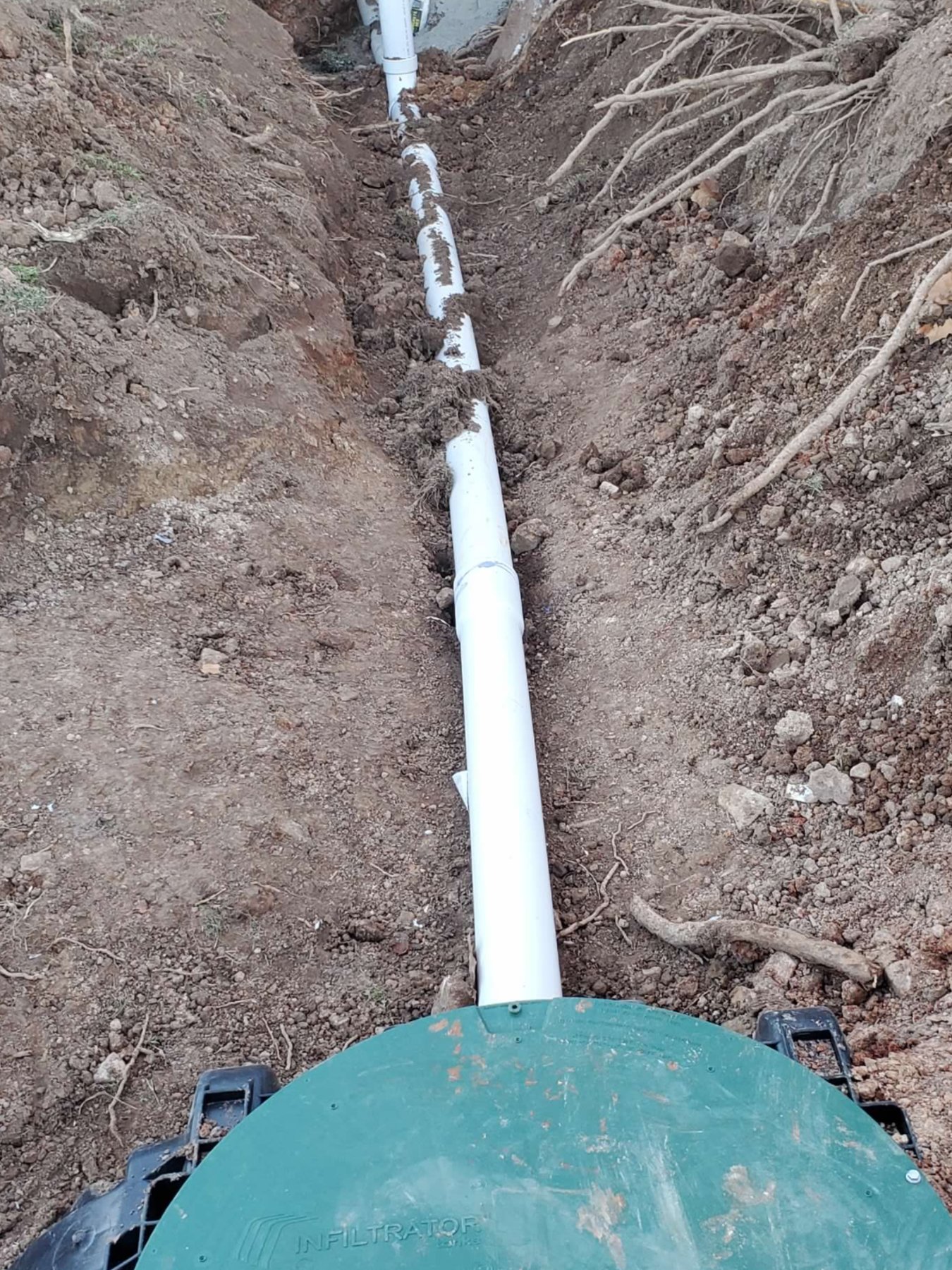
Underground work can reveal conditions that are difficult to see from the lawn. In this J&L Underground Construction project, exposed tree roots run alongside an open trench containing white piping. The image shows why excavation near established landscaping needs a site-specific approach rather than assumptions about what lies below the surface.
If trees are near the planned work area, discuss them before excavation begins. Tell the contractor which trees are important to preserve and whether there has been previous work around them. Where preserving a tree is a concern, an arborist may need to be involved in decisions about significant roots. The right approach depends on the tree, the route, and the work required.
It is also important to separate what is visible from what caused a problem. Finding roots near a pipe does not, by itself, establish that they damaged it. If the project involves a suspected blockage or leak, the condition of the piping needs to be evaluated before choosing a repair.
Ask how changes encountered underground will be communicated. An unexpected root, an existing pipe, or a route that differs from the records can create a decision point. The owner should understand when work needs to pause for clarification and how an alternative would be agreed upon. A clear process for those discoveries is more useful than assuming every buried condition can be predicted from a surface visit or an old photograph.
Before backfill, the installation still needs to meet the requirements for the system and any applicable checks. That is the time to resolve questions about the exposed work. Call J&L Underground Construction at (417) 456-0551 to discuss septic or underground piping work near existing trees and the conditions that need attention at your site.