Utility Trenching Starts With Understanding the Route
Endpoints, existing services, and site access all influence underground work.
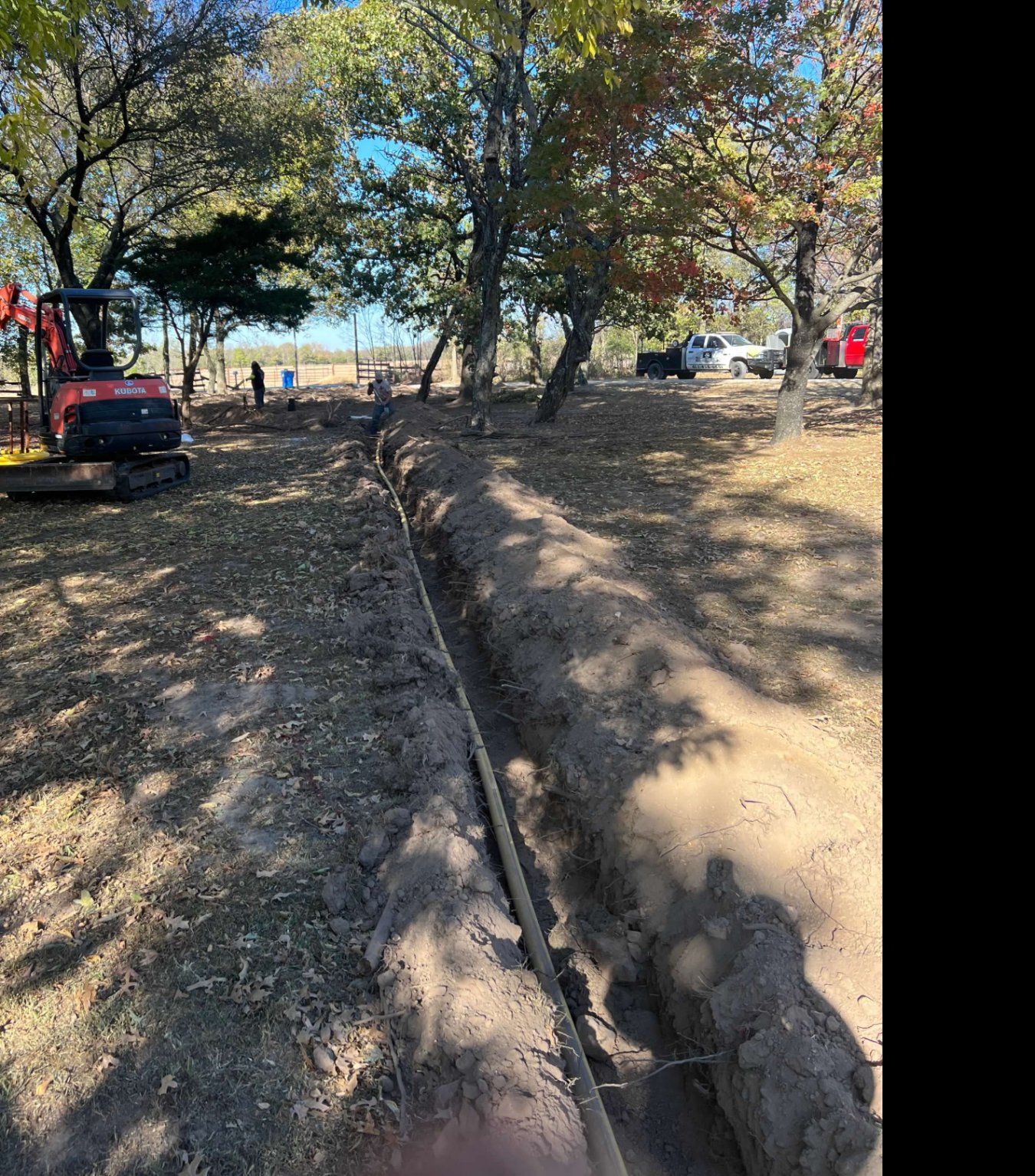
A utility trench links parts of a property below ground, but its route is planned in the context of everything above it. This J&L Underground Construction project shows a long open trench through a tree-lined yard, with a compact excavator nearby. The surrounding space is part of the work, not just a backdrop.
Before excavation, identify what the line is intended to serve and where the connection points are expected to be. The route must also be considered alongside existing utilities and the requirements of the installation. A path that appears shortest on the lawn is not automatically the right path for the project.
Access and staging deserve attention as well. Equipment needs a way to reach the area, and excavated material needs space while the installation remains open. Tell the contractor about features you want considered, such as trees, fences, nearby buildings, or access that must be maintained.
A route discussion should also identify the surfaces that will be crossed. Grass, gravel, concrete, and landscaped areas can lead to different restoration needs. Ask how those areas are treated in the estimate and whether another installation method is worth discussing for a particular crossing. The decision should reflect the utility, ground conditions, and access available, with the final scope making clear what will happen above ground as well as below it.
Ask what records will be available after the work is covered and which restoration tasks are included. These details help connect route planning with the long-term use of the property. Call J&L Underground Construction at (417) 456-0551 to discuss utility trenching and the site information needed to plan your excavation.