Resolve Underground Installation Questions Before Backfill
The open-trench stage is the time to coordinate checks and document the work.
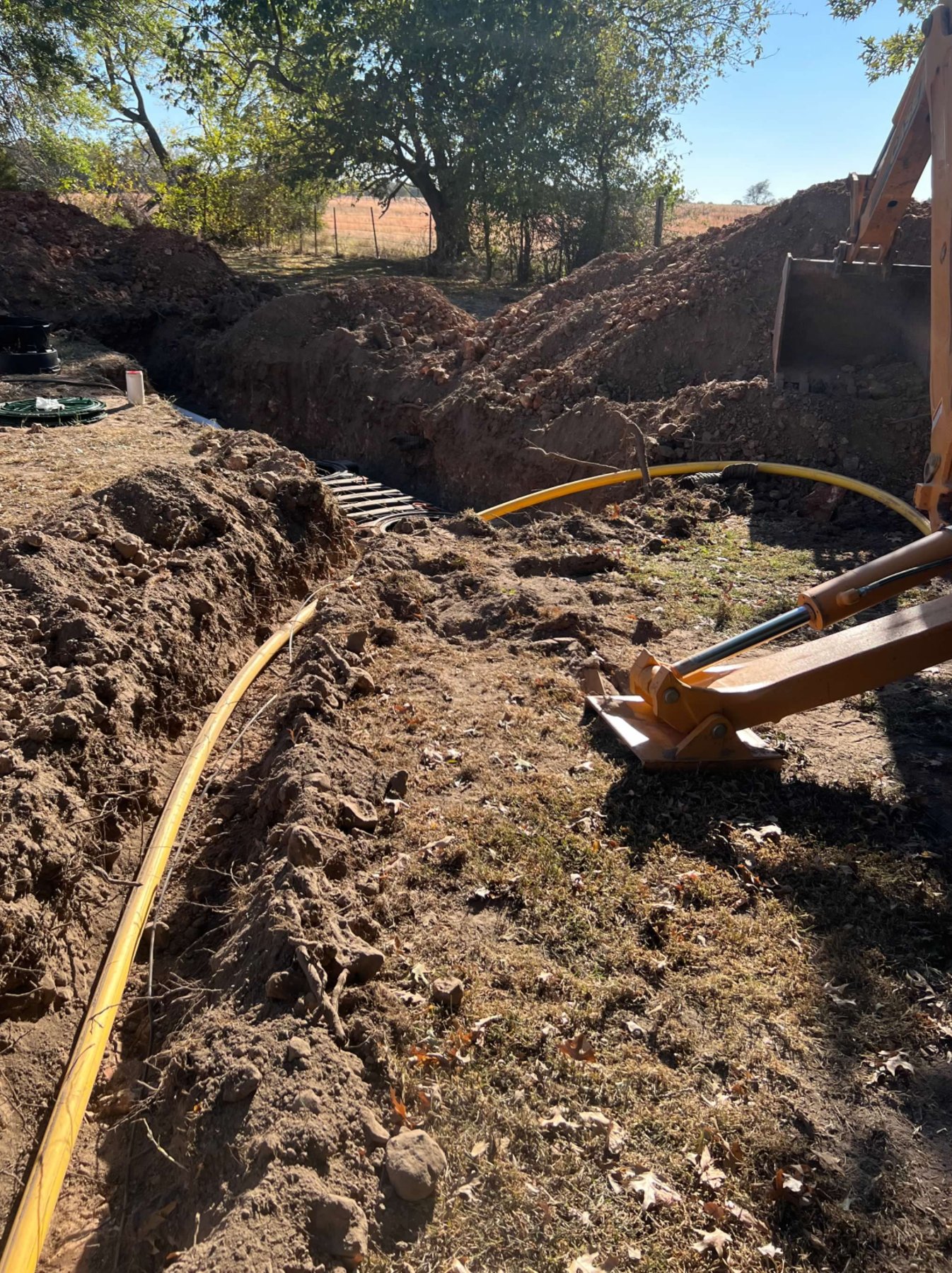
Once an underground installation is covered, direct access to it becomes more difficult. This J&L Underground Construction project shows the open-trench stage, with yellow tubing or piping visible beside excavated soil and equipment. The image highlights a point in the sequence when the work is still accessible for the tasks that must happen before backfill.
The appropriate checks depend on the actual utility and installation. Any required inspection, testing, or review should be built into the project schedule. The responsible contractors need to know who is coordinating those steps and when the excavation can be covered. A line's color alone is not enough to establish its purpose or requirements.
For owners, this is also a useful time to ask about documentation. Route information, connection locations, and the records provided at completion can help with future maintenance or property improvements. Photographs can add context, but they should be kept alongside the more specific installation information.
If another trade needs to see the exposed installation, coordinate that visit before the next stage is due. The owner should understand who confirms readiness for backfill rather than feeling responsible for interpreting the work alone. Where records or checks are required, ask what documentation will be retained. A clear handoff connects the visible stage of construction with the information that remains after the ground is covered.
A clear sequence helps everyone understand what comes next without rushing the decision to cover exposed work. Call J&L Underground Construction at (417) 456-0551 to discuss utility excavation, installation coordination, and the steps that need to fit together before the site moves into backfill and restoration.