Utility Markings Matter During Septic Work, Too
A septic project still needs a plan for the other buried lines sharing the property.
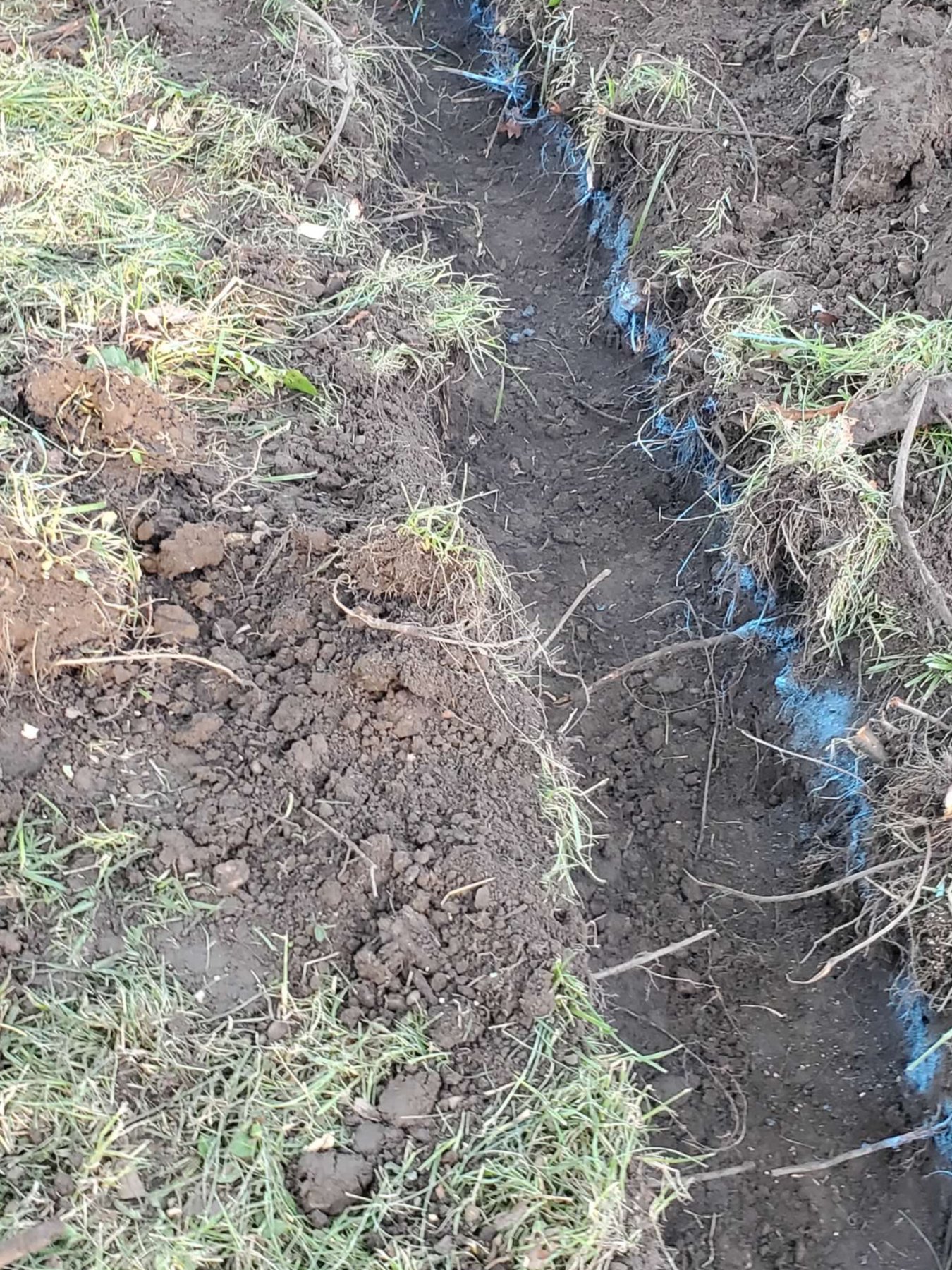
A septic job does not take place in an empty underground space. Other lines may cross the same yard or run near the planned route. This project photo from J&L Underground Construction shows blue marking along a narrow disturbed area, drawing attention to the need to understand existing utilities before digging proceeds.
The locating discussion should cover the actual area of ground disturbance. That includes connecting trenches and equipment-related work where applicable, not only the planned tank location. Contact the state's 811 service before digging, follow its process, and determine whether privately owned lines need separate locating.
Property history can be useful here. Tell the contractor about a detached shop with power, an outdoor water supply, irrigation, or previous installations. Old photos and drawings may help explain what has changed, but they do not replace current locating or establish a line's depth.
Changes made after the locating visit also need to be communicated. A route moved to avoid a tree or a wider excavation requested during construction can affect the area that needs utility information. Tell the responsible team before the revised work begins so the locating coverage can be reviewed. Planning the dig site carefully is useful only if the actual ground disturbance continues to match the area that has been described.
If marks become unclear or conflict with what is found, the affected work needs to pause while the discrepancy is resolved through the appropriate process. The goal is to avoid guessing around a service simply because it was not the main reason for the excavation. Call J&L Underground Construction at (417) 456-0551 to discuss septic work and private utility locating as part of planning your project.