Open Ground Can Still Contain Buried Electric and Water Lines
A clear-looking yard is not a substitute for locating before excavation.
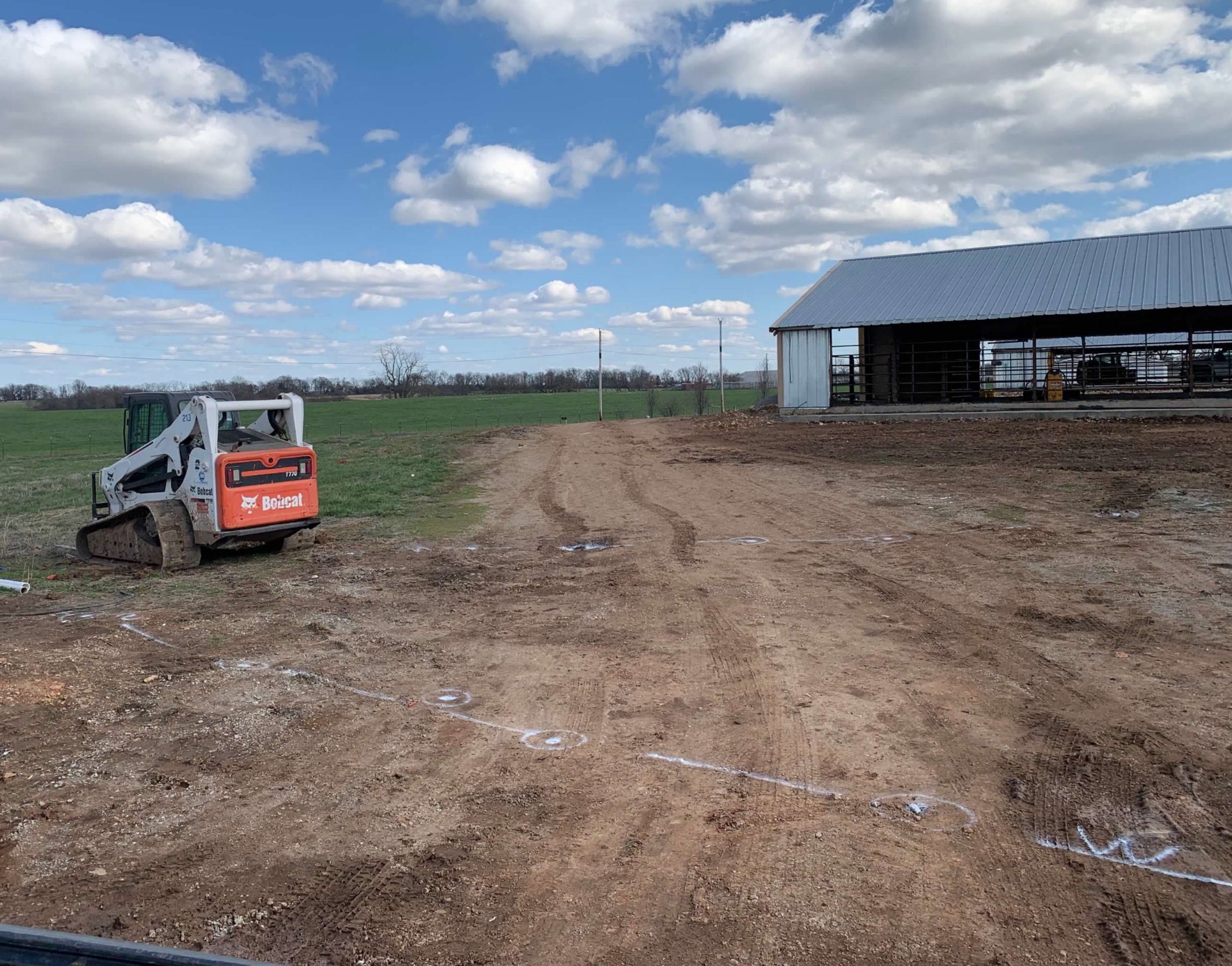
An open area can look ready for a trench, a new fence, or a building improvement. This view from J&L Underground Construction's Exeter electric-and-water locate project shows broad working space between structures, with markings and equipment in the scene. The space above ground does not tell the whole story about what is below it.
Before ground disturbance, define the planned work area and follow the state's 811 process. Also ask whether privately owned services need separate locating. On a property with outbuildings, the network beyond the main service points may be important to the job even when no line is visible from the surface.
Share the history of the site where you can. A former building, old water connection, or electrical feed that was added years ago may still affect today's plan. Records help frame those questions, but they do not establish a current line location or depth by themselves.
Also identify areas used for material staging or other ground-related work associated with the improvement. The planned activity may extend beyond a narrow line between two buildings. Discuss that scope before the locate is organized so the relevant work area is understood. If the project grows later, review the preparation rather than assuming the earlier arrangements cover every newly added portion of the site.
This preparation is useful for small projects as well as major excavation. Fence posts, landscaping, and grading can all involve areas where services exist. Call J&L Underground Construction at (417) 456-0551 to discuss a private locate before your next project. Start with what you intend to build or change so the work area can be described clearly.