Why Utility Equipment Is a Starting Point for a Locate
Visible connections help frame questions about the buried routes beyond them.
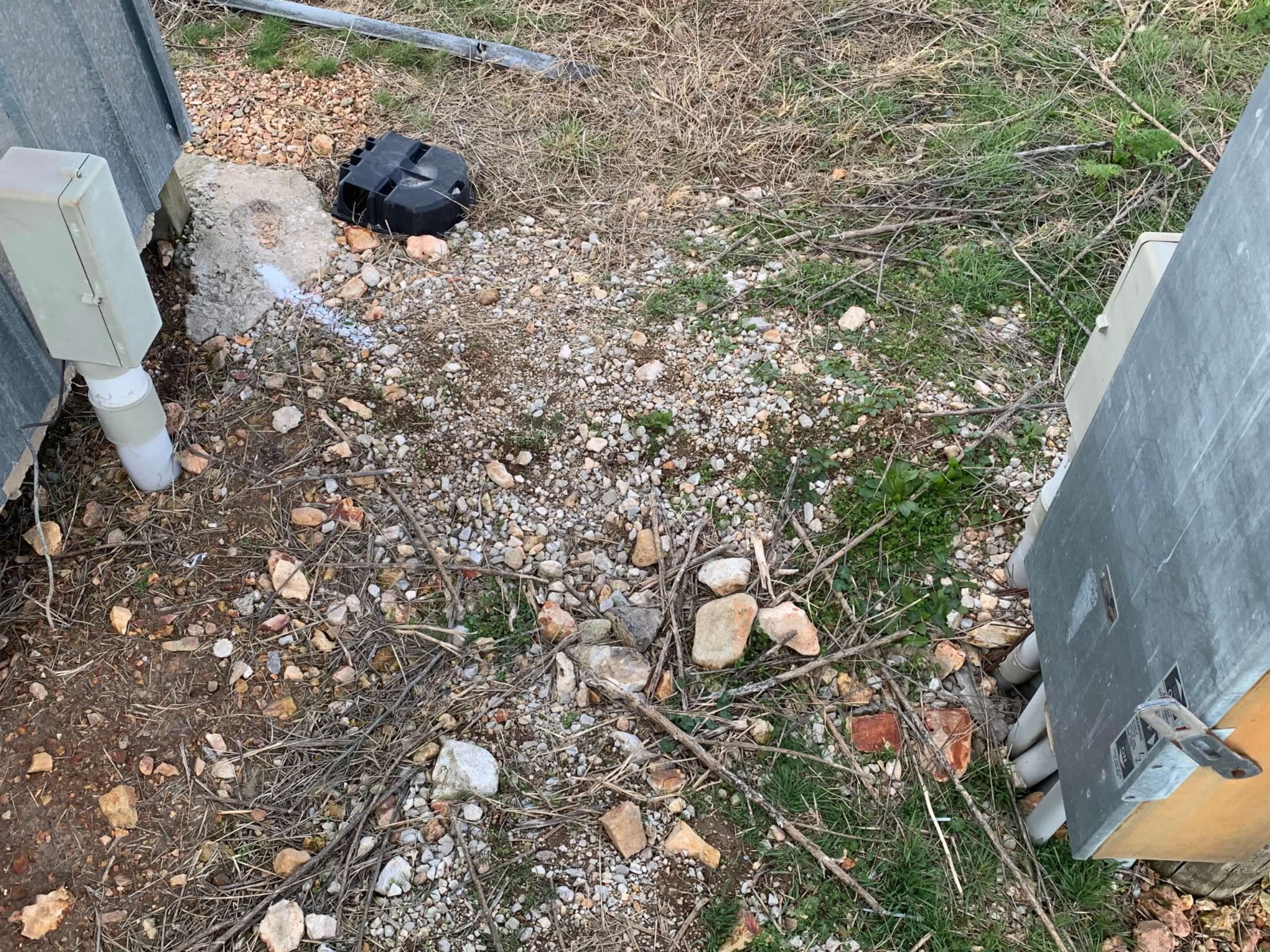
Visible equipment often provides the first clues about a property's underground services. In this close view from J&L Underground Construction's Exeter locate project, utility equipment and conduit sit beside a building. The equipment helps establish the site context, while the buried route still needs its own locating work.
A connection point does not prove that a line runs in a straight path from there to the next building. Earlier installations, additions, and obstacles may have influenced the route. That is why property owners should explain what they know without treating a remembered direction as a confirmed location.
Before a private locate, gather available information about which buildings receive power or water and where known service points are located. Old photos taken during construction can be useful, as can drawings and records of later changes. Share the planned dig area as well; the locator needs to understand the work that is actually being considered.
If the property has changed over time, explain those changes even when the current equipment looks straightforward. A removed building, relocated service point, or older addition may account for a route that no longer follows today's layout. You do not need to know the technical history of every component to flag a useful question. Share what is known, distinguish it from what is assumed, and let the responsible team establish what the project requires.
The result should be used within the excavation planning process, alongside the required 811 notification and the limits of the locating method used. If information is missing or conflicting, resolve it before affected work proceeds. Call J&L Underground Construction at (417) 456-0551 to discuss private electric and water locating around existing service equipment.